



Tips For Avoiding Ultra Processed Foods

One of the latest topics in the world of gut health is ultra processed foods, and the impact they have on the gut microbiome. We’re here to explore what they are, why they’re bad for your gut, and some simple tips for avoiding ultra processed foods in your diet.
What are ultra processed foods?
The NOVA Food Classification System describes ultra processed foods as
“Industrial formulations made entirely or mostly from substances extracted from foods, derived from food constituents (hydrogenated fats and modified starch), or synthesized in laboratories from food substrates or other organic sources (flavor enhancers, colors, and several food additives used to make the product hyper-palatable.”
Put simply, ultra processed foods are simple, whole ingredients that are combined and manufactured to become a different product. In this process, typically the ingredients are chemically modified, a process that has a substantial impact on the gut.
Currently 54% of the total foods eaten in the UK by adults are considered as ultra processed, and whilst not all ultra processed foods are “bad” for you, focusing on eating foods with a minimal number of ingredients, additives and preservatives is ideal.
Why are ultra processed foods bad for the gut?
Research shows that the artificial sweeteners, emulsifiers, preservatives, and food additives disrupt the balance of the gut microbiome, contributing to inflammation. Persistent inflammation of the gut can result in a whole host of physical and mental health complications, so the potential impact of ultra processed foods shouldn’t be underestimated.
Ultra-processed foods usually disproportionately contribute added sugars, sodium, saturated fats and trans fats, and when this is combined with them being lower in fibre, they have low nutritional value and can also be harmful.
What are examples of ultra processed foods?
Some examples of ultra processed foods include:
-
Carbonated drinks
-
Ready-made microwave meals
-
Packaged breads
-
Margarine
-
Biscuits
-
Deli meats
-
Energy drinks
-
Sugary breakfast cereals
-
Packaged sweets and snacks
5 tips to help you avoid ultra processed foods
-
Choose wholegrains
Research shows that eating more wholegrains (brown rice, quinoa, barley, bulgar wheat) over refined grains (white bread, white pasta) can improve cholesterol. Other studies demonstrate that dietary wholegrain intake can be beneficial in the prevention of various serious health problems.
So, opt for minimally processed wholegrains as a source of carbohydrates, as they’re higher in fibre which research shows can help support a healthier digestion.
-
Find products with no added sugar
There is a significant amount of evidence that highlights the negative effects of excessive or prolonged sugar intake on the body. Processed sugars are different from glucose, which is essential for the proper functioning of every organ system. However, glucose can be consumed through healthy dietary sources including fruit, vegetables, and whole grains, which also provide nutritional benefits to the body.
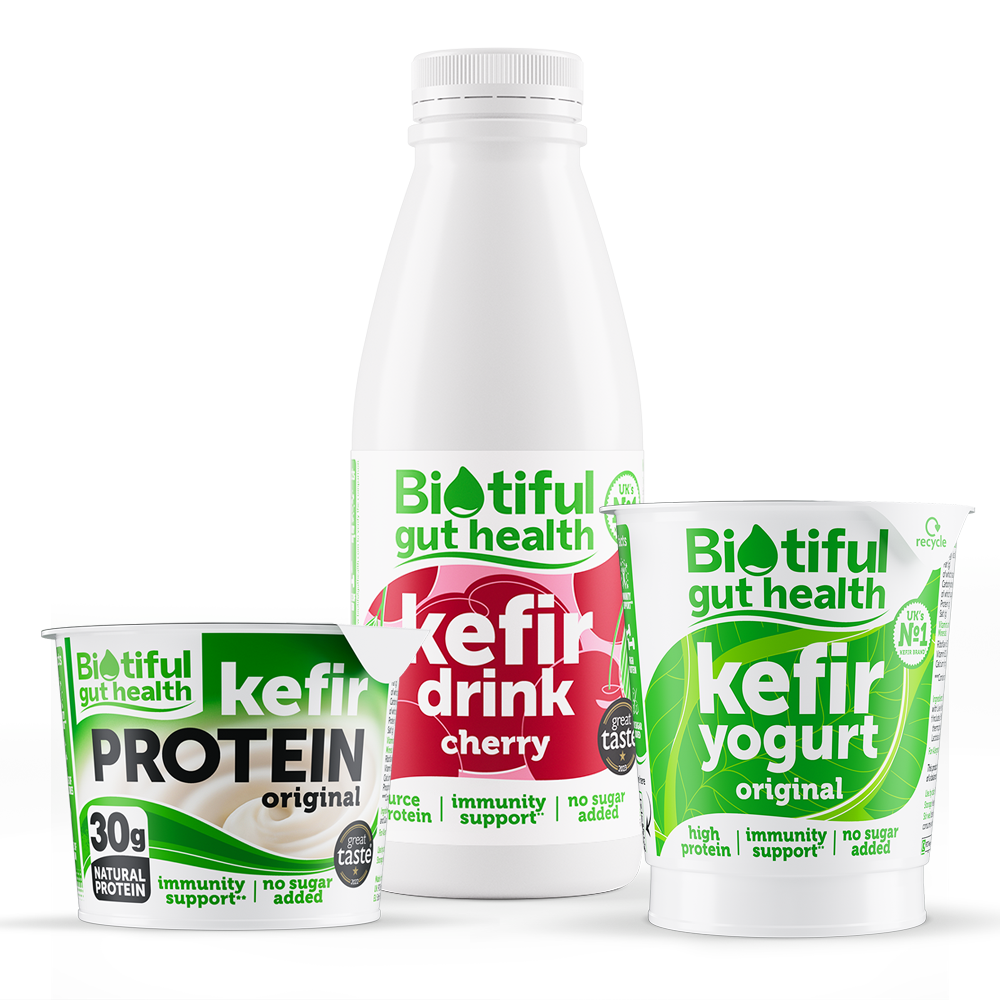
Aim to mostly consume foods without added sugars, particularly when you’re choosing yogurts, cereals and juices, which commonly have sugars added. For a gut-healthy swap, try Biotiful’s Kefir yogurts, with a range of different flavours with no added sugars.
-
Look for simple ingredients
When you next do your food shop and pick up your usual items, take a look at the back of the packet. Many foods contain a number of additives, sweeteners and emulsifiers, yet there will be alternatives that haven’t been ultra processed and will be more beneficial to your gut.
For example, many low calorie cooking sprays contain a range of additives and emulsifiers, so you can make a simple swap over to a 100% extra virgin olive oil spray, or just buy a bottle.
Another common household staple that is ultra processed are jars of pasta sauces, often containing preservatives. Instead, look for a jar that has only simple ingredients, typically chopped tomatoes, tomato paste, olive oil, salt and natural flavourings.
Protein bars are typically framed as convenient for being healthy on the go, yet many of them are ultra-processed, containing additives and artificial sweeteners. Swap out your protein bars for natural versions, or for Kefir protein options that may help to increase the diversity of the gut microbiome whilst also helping you to hit your protein goals.
-
Prep meals ahead
Often we consume ultra processed foods when we’re in a rush and grab a quick option to eat on the go or put in the microwave. So, a good tip for avoiding ultra processed foods is to spend a few hours bulk making some healthy, wholefood meals. You can keep them in the freezer, then simply defrost in the fridge the night before!
Traybakes, slow cooker meals and one-pot recipes are all great for ease and saving on washing up. Another option is to make slightly larger portions throughout the week and freeze a few as you go.
-
Eat less processed meat
Finally, many meats that you find in supermarkets are ultra processed, so making some changes to the type of meat you’re eating is a good way to avoid ultra processed foods. Research shows that excessive consumption of ultra processed meats contributes to gut microbiota dysbiosis, it can compromise the gut barrier, and increases the risk of colorectal cancer.
Sausages, bacon, packaged lunch meats, and convenient items like chicken nuggets, pre-made meatballs and hotdogs, are all examples of ultra processed meat products. Reducing your intake of these in favour of non-processed meats that you cook yourself at home will be beneficial in the long run.